Aelurodon ferox pack pursues a three-toed horse
Vertical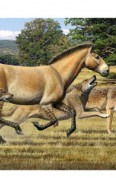 In an artist’s reconstruction of a savanna in western North America about 15 million years ago, a pack of Aelurodon ferox (in the canid subfamily Borophaginae) pursues a three-toed horse of the genus Neohipparion. In such an open landscape, both predator and prey were driven to evolve stamina and speed. Mauricio Antón | Horizontal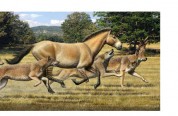 In an artist’s reconstruction of a savanna in western North America about 15 million years ago, a pack of Aelurodon ferox (in the canid subfamily Borophaginae) pursues a three-toed horse of the genus Neohipparion. In such an open landscape, both predator and prey were driven to evolve stamina and speed. Mauricio Antón | Thumb In an artist’s reconstruction of a savanna in western North America about 15 million years ago, a pack of Aelurodon ferox (in the canid subfamily Borophaginae) pursues a three-toed horse of the genus Neohipparion. In such an open landscape, both predator and prey were driven to evolve stamina and speed. Mauricio Antón |