Two colonies of P. aeruginosa
Vertical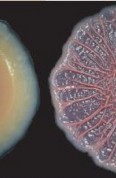 Two colonies of Pseudomonas aeruginosa were grown for three days on agar plates. The bacteria at left have been engineered to overproduce phenazines, molecules that transport their metabolic “waste”—in the form of electrons—to atmospheric oxygen. Phenazines permit the bacteria to grow in a mass. The cells in the colony at right, rendered incapable of producing phenazines, adjust their growth pattern to maximize surface exposure to oxygen. (Dyes were used to accentuate structural differences.) Lars Dietrich, Columbia University | Horizontal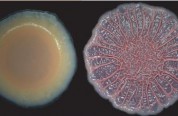 Two colonies of Pseudomonas aeruginosa were grown for three days on agar plates. The bacteria at left have been engineered to overproduce phenazines, molecules that transport their metabolic “waste”—in the form of electrons—to atmospheric oxygen. Phenazines permit the bacteria to grow in a mass. The cells in the colony at right, rendered incapable of producing phenazines, adjust their growth pattern to maximize surface exposure to oxygen. (Dyes were used to accentuate structural differences.) Lars Dietrich, Columbia University | Thumb Two colonies of Pseudomonas aeruginosa were grown for three days on agar plates. The bacteria at left have been engineered to overproduce phenazines, molecules that transport their metabolic “waste”—in the form of electrons—to atmospheric oxygen. Phenazines permit the bacteria to grow in a mass. The cells in the colony at right, rendered incapable of producing phenazines, adjust their growth pattern to maximize surface exposure to oxygen. (Dyes were used to accentuate structural differences.) Lars Dietrich, Columbia University |